NGABEN - The Cremation Ceremony in Bali
NGABEN - The Cremation Ceremony in Bali
What is "Ngaben"?
Ngaben is one of the most important ceremonies in Balinese culture and probably the most significant in a life of a Hindu Balinese. It’s a centuries-old tradition culminating in the cremation of the deceased body. Bali, which is well known as the land of 10 thousands temples, all aspects of life on the Indonesian island of Bali are influenced by spirituality. Colorful, elaborate ceremonies are regular occurrence in towns and villages across the island, but none more breath-taking than Ngaben, the Balinese cremation ritual.

Photo Source : (authenticindonesia)
The majority of Bali’s population follows Hinduism. Hinduism teaches that life is a cycle of birth, death and rebirth, which can only be broken when the soul is pure enough to be reunited with the gods. In order to be reincarnated into a new body, the soul must be released through the cleansing fire of a cremation.
What's the Process of this Balinese Cremation ?
Ngaben literally means ‘turning into ash’. This lavish and expensive ritual is thought to guide the spirit into its next life and is considered as a celebration. The Ngaben processions are often colorful and noisy. The day for the ceremonial cremation is chosen by a priest, according to the Balinese calendar.As the ceremony cost a lot, some families have to save during long period of time to afford it.Sometimes, the ceremony only takes place months and even years after the person died.
Although generally known as traditional cremation, the ngaben ceremony involves a lot more rituals, starting with calling out the atma or soul, especially if the deceased passed away outside of the home—maybe an accident, in a hospital, or such.
After that, the body is cleansed and given symbolic amenities to make sure he or she will receive a perfect body in the next life. The elders and priests will then pray for the soul of the deceased, asking for a smooth journey to the other side.
 Photo Source : (authenticindonesia)
Two very important elements of Ngaben are the Waddhu and the Lembu. The Waddhu, also sometimes called the Bade, is a ceremonial tower of multiple levels, made from bamboo, wood and paper. The more important the died person was, the more levels the Waddhu will have.
These towers are often brightly colored with fantastic designs. They are carried during the funeral procession and turned around multiple times to discourage the spirit from lingering. The Lembu, meaning ox, is the coffin containing the person who has died. The coffin is often shaped to look like an ox or other animal. It will also be carried during the procession and burned along with the Waddhu.

Photo Source : (authenticindonesia)
The upper classes and royalty of Balinese society do not have Ngaben. Upper class funerals are called Pelebon and are even grander and more extravagant. The Waddhu will have nine floors to signify their high status and will take many hours of expert craftsmanship to build before being engulfed in flames.
Apart from the symbolic tower and special coffin, the family of the person who died may also hire a Gamelan. The word Gamelan is a Javanese word meaning ‘strike with a hammer’, and refers to an orchestra of percussion instruments, often used in religious rituals. The Gamelan will escort the funeral procession, contributing to the noisy, festival atmosphere.

Photo Source : (authenticindonesia)
Once the procession reaches the place of the cremation, a priest will light the fire to burn the Lembu and the Waddhu. Often mourners will take this time to reflect in peace and watch the cremation. Afterwards they will share food and drink.
The ashes from the cremation will be scattered in the sea. In the 12 days after the Ngaben, the family will build and burn effigies of the person who has died and also scatter these ashes in the ocean. That concludes the long, intricate process of celebrating death and welcoming new life.
When Can You See Ngaben Ceremony?
Unlike other death ceremonies, Ngaben is celebrated merrily by the Balinese as this ceremony shows that family members have completed their duty. There should not be any tears of sadness as Balinese believe that it will hinder the spirit reaching their next life.
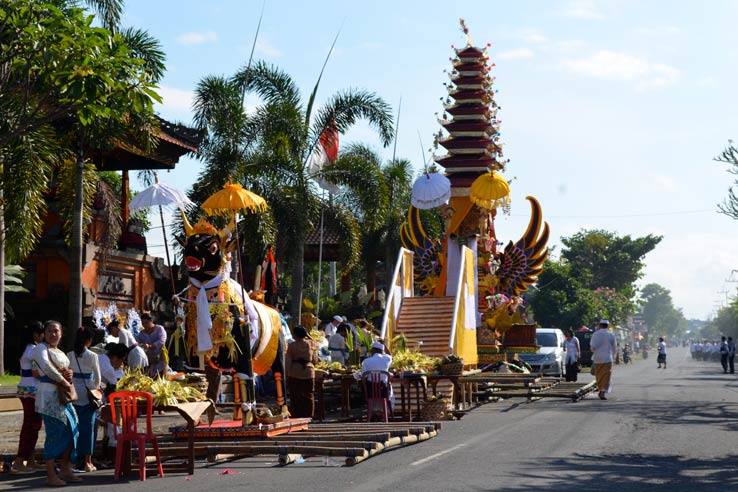
Photo Source : (claraprilli)
This ceremony normally isn’t taken immediately after one’s death. It must take place on a particular day as calculated by the Balinese calendar or recommended by the priest. A lot of time will also be required for the preparation, ranging from weeks until months for bigger ceremonies. Some families also wait a few years after their family has passed away, since a lot of money is needed to pay all the expenses.
Every few years a collective Ngaben ceremonies, also known as Ngaben Masal is held. The difference between the regular one is, in Ngaben Masal, a number of people are cremated at once. One of the purposes is to help reduce the cost. However, high Hindu priests or religious leaders will normally be cremated right away. On the other hand, royal families will need several months to prepare for a special cremation ceremony. This is due to the procession that can take up to 3 days for individuals with higher caste. So, if you are lucky, you can see the Ngaben Ceremony during your visit to Bali, Indonesia.
Source : (Mara River Safari, Authentic Indonesia )
Komentar
Posting Komentar